
Gato gPrecision Module Adds Real-Time Margin Analytics
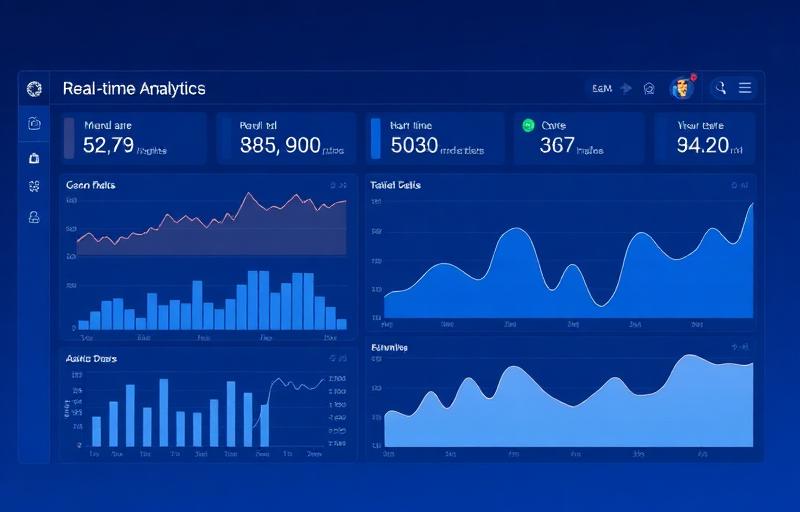
New features in gPrecision deliver instant margin calculations across global equities, options, and futures.
Gato is excited to announce significant new capabilities in gPrecision, our risk and margin module, including real-time margin analytics that provide instant calculations across global equities, options, and futures positions. This update represents one of the most substantial enhancements to gPrecision since its launch.
The new margin analytics engine processes position changes in real-time, calculating initial margin, maintenance margin, and margin utilization across multiple clearinghouses and margin methodologies. Whether a firm uses TIMS, SPAN, or proprietary margin models, Gato gPrecision now provides a unified view of margin requirements across the entire book.
For prop trading groups and hedge funds managing complex multi-asset portfolios, this capability is transformative. Instead of waiting for end-of-day margin reports from their clearing firm, traders and risk managers can see the margin impact of every trade as it happens. This real-time visibility enables more efficient capital allocation and faster response to changing market conditions.
The update also introduces what-if scenario analysis, allowing risk teams to model the margin impact of hypothetical trades before execution. This is particularly valuable during volatile market periods when margin requirements can change rapidly, and firms need to ensure they maintain adequate capital buffers.
Integration with gHub means that margin checks can be incorporated directly into the order workflow. Firms can set automated pre-trade margin controls that prevent orders from being submitted if they would breach defined margin thresholds—adding an additional layer of risk management without slowing down execution.
The real-time margin analytics feature is available now for all Gato gPrecision clients. Existing clients can activate the feature through their Gato configuration dashboard, and our implementation team is available to assist with custom margin model configuration.
Under the hood, the engine recalculates on every event that can move a requirement: fills and partial fills, cancels and replaces, corporate-action adjustments, price and volatility updates, and position transfers between accounts. Rather than recomputing the entire book on a schedule, it revalues the affected legs and their offset groups, which is what keeps a large multi-asset portfolio inside a latency budget traders will actually rely on during a fast market.
Offsets are where most naive margin estimates break down. A long stock position hedged with puts, a calendar spread, and a futures leg against a cash basket all attract very different requirements depending on how the methodology recognises the relationship, and a simple sum of gross legs can overstate the requirement by a wide margin. Because gPrecision runs each clearinghouse's own methodology rather than an approximation of it, the offsets recognised intraday are the same offsets the clearing firm will recognise overnight.
The module reports requirements per account, per strategy, and at the firm level, so buying power can be delegated without losing the consolidated view. Risk managers can set utilisation thresholds at any level of that hierarchy, with warning bands ahead of the hard limit, and see which underlying positions are consuming headroom rather than only that a limit was approached. For firms extending capital to multiple desks or sub-accounts, that attribution is usually the difference between a limit that gets respected and one that gets overridden.
Because the same engine sits in front of the order path through gHub, a firm can express its capital policy once and have it enforced consistently. Pre-trade checks evaluate a proposed order against projected utilisation, not just current exposure, and rejections carry the reason and the contributing positions back to the trader. Everything the engine computes is written to the same audit record used for reporting and reconciliation, so the intraday number, the control decision, and the overnight statement all trace to one source.
Why end-of-day margin is a risk decision made too late
Most firms still learn their true margin position from a clearing file that arrives after the close. For a book that turned over during the session, that number describes a portfolio the firm no longer holds. Intraday decisions — whether to add to a position, how much buying power to extend to a trader, whether a hedge actually reduced the requirement — get made against an estimate, and the correction arrives when nothing can be done about it.
The gap widens exactly when it matters. On a volatile day, requirements move, offsets that held in the morning stop holding, and a book that looked comfortably margined at the open can be close to a call by mid-afternoon. Real-time calculation replaces the estimate with the same arithmetic the clearing firm will run, so the intraday view and the overnight statement are not two different stories.
Because the engine runs the methodology per clearinghouse, a multi-asset, multi-clearer book resolves to one number rather than a spreadsheet of partial views. TIMS, SPAN, and house models each produce their own requirement, and the aggregate view shows utilisation and headroom across all of them without an analyst joining files by hand.
The scenario tooling turns the same engine toward a decision that has not been made yet. A risk manager can price the margin cost of a hedge, a roll, or a size increase before it reaches the market, and the pre-trade control in the order path enforces the answer automatically when a proposed order would push utilisation past the firm's threshold.
- Initial margin, maintenance margin, and utilisation recalculated as positions change.
- TIMS, SPAN, and proprietary house models resolved into one book-level view.
- What-if scenarios priced before an order is sent.
- Pre-trade margin thresholds enforced inside the order workflow.
- Intraday numbers reconcilable against the overnight clearing statement.
- Requirements attributed by account, strategy, and firm-level rollup.
- Recalculation triggered by fills, amendments, corporate actions, and price moves.
See this running in production
Book a working session with our team. We walk through your venues, volumes, and reporting obligations on a live environment — no slideware.