
Institutional Trading Technology Product Suite
Trading, risk, compliance and operations unified in a single platform to power the full trade lifecycle.
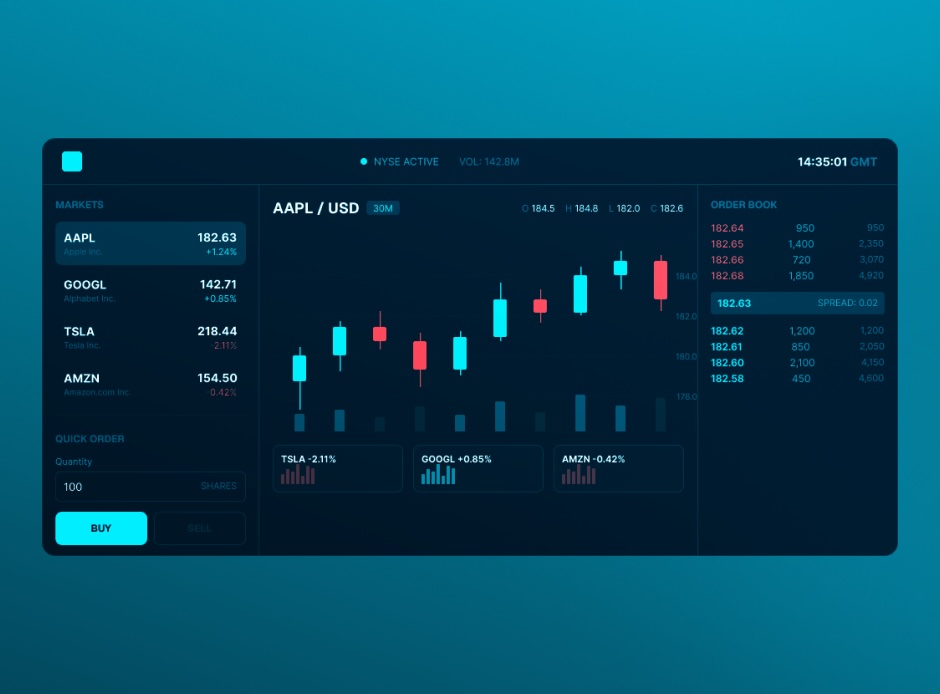
Trading & Execution
Order Flow, Connectivity & Execution
One order book, one trading front end, and one link to global venues. Built for fast, institutional-grade execution.


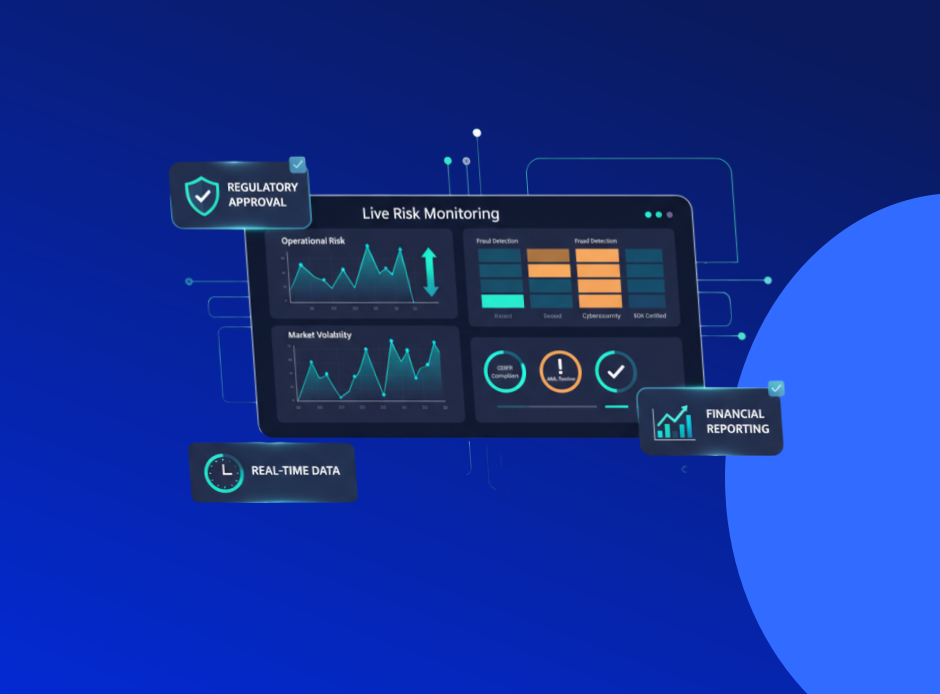
Risk & Compliance
Real Time Risk & Regulator Ready Reporting
Live pre-trade risk checks plus CAT and CAIS reporting. Compliance grows with your volume, not against it.
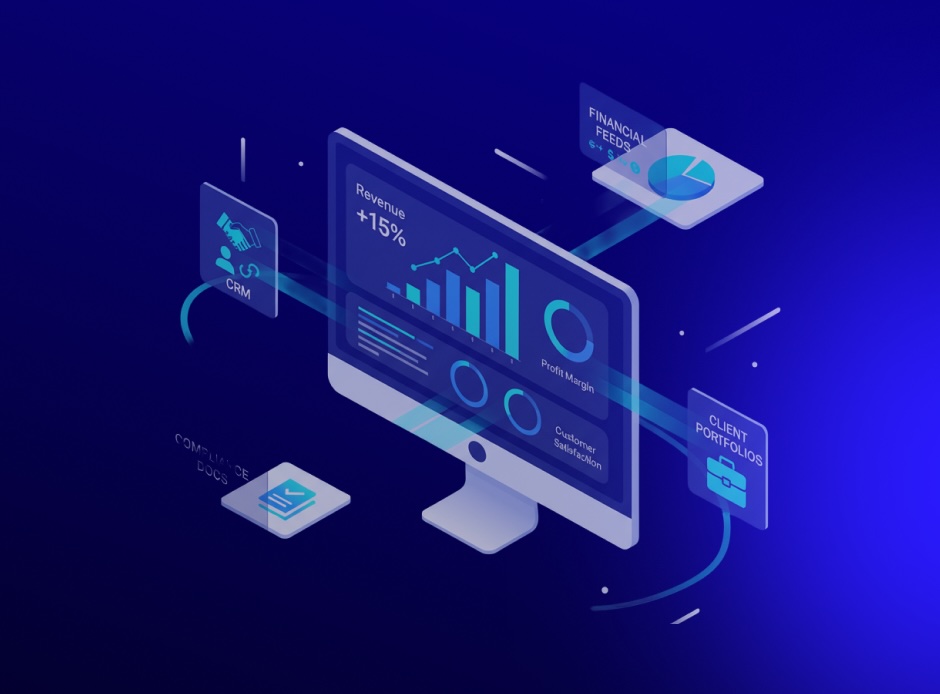
Operations & Data
The Operational Backbone of Your Firm
Digital onboarding, corporate actions, reporting, and client self-service. One workflow layer that keeps the back office moving.






How firms deploy the Gato suite
Gato Systems builds institutional trading technology as a set of interoperable modules rather than a single monolithic platform. Trading and execution, risk and compliance, and operations and data each solve a distinct problem, but they share one instrument master, one entitlement model, and one normalised event stream across the trade lifecycle.
That structure matters because most firms do not replace their entire stack at once. A broker-dealer under SEC Rule 15c3-5 pressure may start with pre-trade risk controls; a prop firm scaling into new venues may start with FIX connectivity and order routing; an operations team drowning in CAT and CAIS exceptions may start with reporting and reconciliation. Each entry point is production-ready on its own, and every additional module inherits the same reference data, audit trail, and access controls instead of introducing another integration to maintain.
Below are the questions firms ask most often when evaluating the suite. If your situation is more specific, the solution finder maps firm type and obligation to a recommended starting stack.
How modular is the Gato product suite?
Every module runs standalone or as part of the wider platform. Firms typically start with one pressing problem, FIX connectivity, pre-trade risk, or CAT reporting, and add modules as they grow.
Because all modules share one data model and one entitlement layer, adding a second module is a configuration exercise rather than a new integration project.
Do I need to replace my existing OMS to use Gato?
No. gHub can sit alongside an incumbent OMS as a connectivity and routing hub, consume drop-copies, and normalise executions for downstream risk and reporting.
Many firms run Gato in parallel first, then consolidate once the flow and reconciliation match.
Which asset classes are supported across the suite?
US and international equities, listed options, futures, and FX, with extensible adapters for additional instruments. Risk, reporting, and post-trade modules inherit the same instrument master, so cross-asset positions and exposures stay consistent.
How long does a typical implementation take?
Connectivity and risk deployments are usually measured in weeks, not quarters, because certification templates, venue profiles, and regulatory schemas ship preconfigured.
Reporting engagements depend on the quality of upstream reference data, which we assess during onboarding.
How are modules deployed and supported?
Modules run as managed services with per-environment credentials, IP allow-lists, and entitlement scoping.
Each engagement includes a UAT environment with simulated venues, a conformance run against production-shaped sessions, and named implementation contacts through go-live and the first reporting cycles.
What happens to data shared between modules?
Accounts, instruments, positions, and order events live in one data model with a single entitlement layer, so a second module reads existing records rather than importing a copy.
That is what removes the reconciliation step firms otherwise carry between trading, risk, reporting, and back-office systems.
Which regulatory obligations do the modules address directly?
SEC Rule 15c3-5 pre-trade controls, CAT order-event reporting, CAIS customer and account submissions, FINRA Rule 4210 margin requirements including the newer intraday interpretations, and the same-day reconciliation demands created by T+1 settlement.